You probably ignore your air conditioning until it fails on the hottest day of the year. Most property managers do. Yet, statutory compliance paperwork often arrives with even less warning. If your building operates air conditioning systems with an effective rated output of more than 70kW, a TM44 inspection is not optional. It is a legal requirement.
Energy regulations evolve. Penalties for non-compliance sting more than ever. Let us break down what these inspections actually involve, why the rules matter right now, and how to stay on the right side of the law without losing your mind.
Demystifying the TM44 air conditioning energy assessment
Think of a TM44 inspection as an MOT for your cooling infrastructure. It is a formal statutory examination mandated by the Energy Performance of Buildings Regulations. An accredited energy assessor reviews your entire system. They check performance, sizing, controls, and maintenance history.
The goal is simple. Buildings waste vast amounts of energy through oversized, poorly controlled, or neglected cooling equipment. A proper inspection highlights those inefficiencies.
Why does this matter for your bottom line? Because an inefficient system burns through electricity. It also breaks down when you need it most. We have spent over 20 years trading across the industry, and we regularly see commercial setups wasting thousands of pounds simply because nobody reviewed their actual cooling loads.
Here is what the assessor typically examines:
- Actual cooling capacity versus current building requirements
- Control strategies, timers, and zoning schedules
- Refrigerant types and overall system integrity
- Ventilation rates and indoor air quality provisions
- General maintenance standards and historical upkeep
Does your specific building actually need one?
The legal threshold depends entirely on scale. Any building featuring air conditioning systems with a combined effective rated output exceeding 70kW requires a valid TM44 certificate. That figure catches many facility managers off guard.
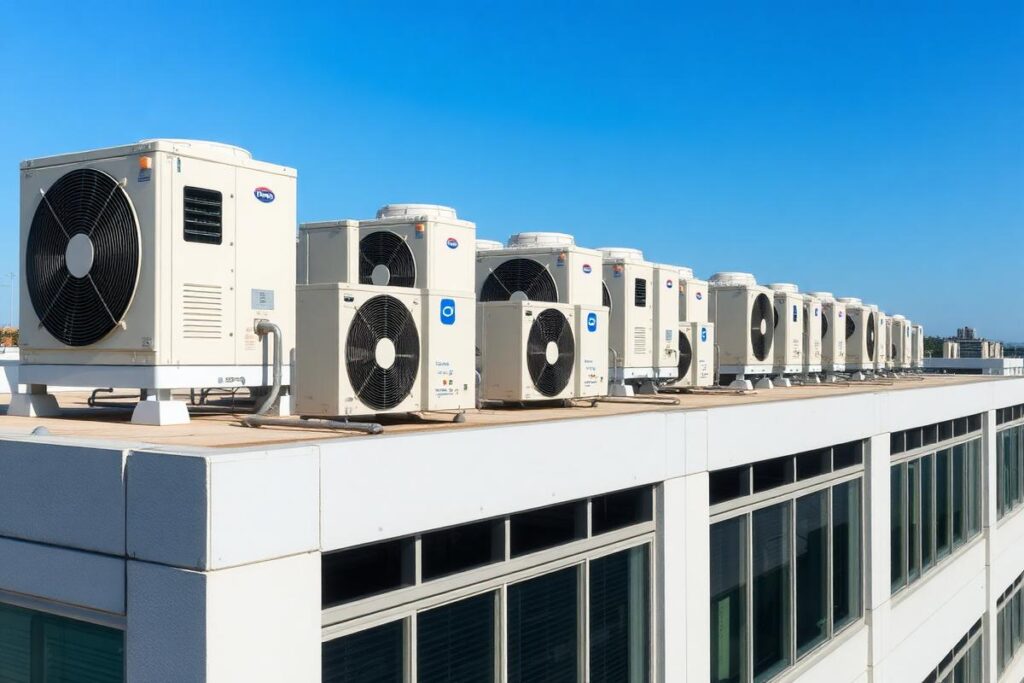
Individual split units add up quickly. If you run multiple smaller cassettes or ducted setups across several floors, you might easily cross the 70kW threshold without realising it. F-Gas certified engineers can help calculate your exact aggregate load during a routine service and repair visit if you are unsure.
Let us look at the timeline rules:
- Assessments must be renewed at intervals not exceeding five years.
- New systems installed or taken over must be inspected within five years of their first commissioning.
- Older systems with no previous inspection history need immediate attention to avoid enforcement action.
A TM44 report is not just a tick-box exercise for local authorities. It is a roadmap to lower energy bills, fewer emergency call-outs, and extended equipment lifespan.
The risks of letting your inspection lapse
Trading standards and local weights and measures authorities enforce these surveys. Ignoring the requirement invites financial penalties. Enforcement officers can issue penalty notices for failing to produce a valid report upon request.
Beyond fines, there is the insurance angle. Many commercial property insurers scrutinise compliance records closely when investigating claims. If an unserviced, unchecked system causes a major failure or a refrigerant leak, adjusters ask difficult questions.
Reactive repairs always cost more than planned upkeep. Waiting for a breakdown guarantees higher bills. Same-day call-outs save your skin in an emergency, but avoiding the emergency in the first place makes much better business sense.
We often find that buildings skipping their energy assessments are also neglecting basic upkeep. Clean filters, correct refrigerant charges, and balanced airflow keep compressors running smoothly for decades. When backed by a 20+ year warranty support framework on eligible new installations, proper compliance simply protects your investment.
How to prepare your facility for an upcoming assessment
Preparation cuts down the time the assessor spends on-site. Gather your documentation before they arrive. Pull together your maintenance logs, previous TM44 certificates if you have them, and service records from your last engineer call-out.
Ensure easy access to all plant areas. Roof spaces, plant rooms, and suspended ceilings often collect clutter. Clear those pathways.
Take advantage of a free site survey to map out your equipment inventory beforehand. Knowing what plant you have, where it sits, and how it is controlled makes the formal inspection straightforward. It also gives you a chance to address minor snags before the official report is written.
Keep your team informed. Let building occupants know that an assessor will be checking indoor terminals and thermostats. A well-prepared building sails through the audit with zero drama.
Taking control of your commercial cooling compliance
Navigating commercial property regulations feels complicated. It does not have to be. Five-star ratings across our client base prove that straightforward, honest guidance works best. You do not need confusing jargon or manufactured urgency.
Check your existing certificates today. If your last report is approaching the five-year mark, or if you have never had one done, now is the time to act. A compliant building is an efficient building, and an efficient building keeps operating costs predictable throughout the year.
Ready to get your cooling systems audited and fully compliant? Book Free Consultation with our specialist team today.
Most customers weighing this up also look at How much does air conditioning cost in the UK? A 2026 pricing and installation guide.
Frequently Asked Questions
Who is legally responsible for obtaining a TM44 certificate?
The person in control of the air conditioning system is responsible. This is usually the building owner, property manager, or long-term commercial tenant depending on the lease agreement.
What happens during a TM44 site visit?
An accredited assessor inspects accessible indoor and outdoor equipment, evaluates control settings, reviews maintenance records, and calculates whether the system matches the building’s current cooling needs.
How long is a TM44 certificate valid?
Certificates remain valid for a maximum of five years. A new inspection must be completed and lodged on the central register before that five-year window expires.
Are small offices exempt from these rules?
If the combined effective rated output of all air conditioning units in the building is 70kW or less, the TM44 requirement does not apply. However, larger offices and retail spaces easily exceed this threshold.
Can a standard maintenance engineer complete the inspection?
No. TM44 inspections must be carried out by an accredited energy assessor who holds the appropriate certification and is registered with an approved government-recognised scheme.
Book Free Consultation
Ensure your building meets all current air conditioning energy regulations with expert advice and a comprehensive site review.